

Senses and Seasons
Winter to me, is taste. Every season capitalizes on the senses in a new and fresh way.
Summer is sight
Winter is taste
Spring is smell
Fall is touch
Hearing is all four
This is my interpretation and of course, does not have to match your own. So for your style exercise of the week,
Think to yourself which senses do you identify most heavily with Winter.Then go to your wardrobe and choose three pieces that you correlate to that sensation.
A jacket in the same brown tone as your favorite cardamom bun for taste
Build three separate outfits you have never worn starting with each of those pieces.
The Seesaw Method
In the spirit of contrast lets fine tune a way to play with it. '
Go to your wardrobe and identify your favorite type of clothing. Is it casual pieces? Knits? Patterned items? Clothes with robust color palettes? Choose one piece to start building your outfit around.
Now, choose your next piece based on something you’d identify as the opposite of your first piece. For example:
Casual clothing / Formal clothing
Summer clothes / Winter clothes
Knitted pieces / Leather pieces
Clubbing clothes / Office clothes
Then seesaw back and forth between these two styles, adding one piece, then another.
Next, add three accessories you don’t normally think of: a hat, socks, necktie, jewelry, stockings, brooches, handbags—something to remind you that an outfit can go beyond just a top, bottoms, and a jacket and see what new combinations reveal themselves.
Impracticality
We can’t talk about practicality without discussing its antonym: impracticality.
Often, when we’re trying to get dressed, we end up in an outfit that isn’t our style at all simply for the sake of getting out the door. But just as it’s important to learn how to build an outfit, it’s equally important to learn how to fix one.
Build an outfit using your most impractical and difficult-to-style pieces. There must be at least six different items in the outfit. This can include socks, bags, pants, jackets, anything, as long as there are six distinct pieces.
Now, instead of hating the outfit and tearing it all off, we’re going to work backwards. Remove one piece at a time, and replace it with its opposite, whether that’s in shape, fit, texture, color, or style.
Wearing a giant denim jacket? Swap it for a fitted blazer. In a tight midi skirt? Try pants, or a skirt of a different length or silhouette. Go piece by piece, and practice seeing the outfit as a sum of its individual components. Troubleshoot each one, and sharpen your skills in fixing a look, not just building it.
Relearning How to Build
One of the things that can keep us stuck in a style rut is how we build our outfits. It usually goes like this:
You pick a pair of pants or a top, then you pick a top or a pair of pants to match. Add a jacket if it’s chilly, and boom — you hit a wall. What now?
When we start an outfit from the same place every day, whether that’s your shoe choice, or a pair of pants or a jacket, we’re setting ourselves up to fall down the same monotonous styling path every single time.
Start your outfit from a place you never have before. This could be choosing a belt as your first piece, then moving on to a jacket and building from there. Maybe start from a makeup look that inspires the rest of your choices, or even a pair of socks.
Start from somewhere new. Then choose your next piece from the opposite end of your body. If you start with makeup, your next choice should be around the feet, and vice versa.
This will get you out of the styling rut where your next choice feels obvious. It’ll also force you to consider styling components you might have been overlooking. Components that can make your outfit feel way more intentional.
A Look at Patterns
I want you to focus on patterns. What subconscious choices are you making, ones you might not even be aware of, that are forming the perception of you and your style?
Spend the next week documenting your outfits. It doesn’t have to be much! Just a quick mirror selfie saved to an album, and a sentence or two about how the outfit made you feel.
After seven days of tracking what you actually wear in real life, take a moment to identify your most common colors, textures, and shapes. What do you keep gravitating toward?
Then ask yourself, do I like these styling choices? Are they reflective of, or guiding me toward, the personal style I have envisioned for myself? Or, do these outfits feel like they’re going in the completely wrong direction?
How to Mix Seasons
We’ve discussed in the past how to do this by mixing dress codes, but this time we’re going to mix seasons.
Start at the bottom of the frame and choose a shoe that screams summer. Then move up a bit to your bottoms, where we’ll switch things up by choosing a winter piece. Move to the middle of the frame by pairing a fall-appropriate top. Finally, end with an accessory up top that’s perfect for spring.
You can play around with the order of your seasons—it doesn’t have to follow this exact sequence. Just make sure you’re mixing pieces that you feel a bit hesitant about at first, and see what new combinations emerge when you lean into some weather madness.
Abstract Style Inspiration
Abstract style inspiration is anything that has nothing to do with clothing that still evokes some type of creative feeling or curiosity. This could be religion, books, scenes of nature, hobbies you have, or even photos that remind you of a memory you hold very dear.
This category of style inspirtaion is the most important because it’s what tethers your actual personhood to your style goals. It’s the connection between who you are and who you want to be when you start to bring outfits to life from it.
Look at paintings, movies, food, your living room, and find anywhere you see a combination of colors and texture that interests you. Pull styling details from it to create a outfit unique to your taste/aesthetics. You’ll often find color combinations here you may have never thought of before.
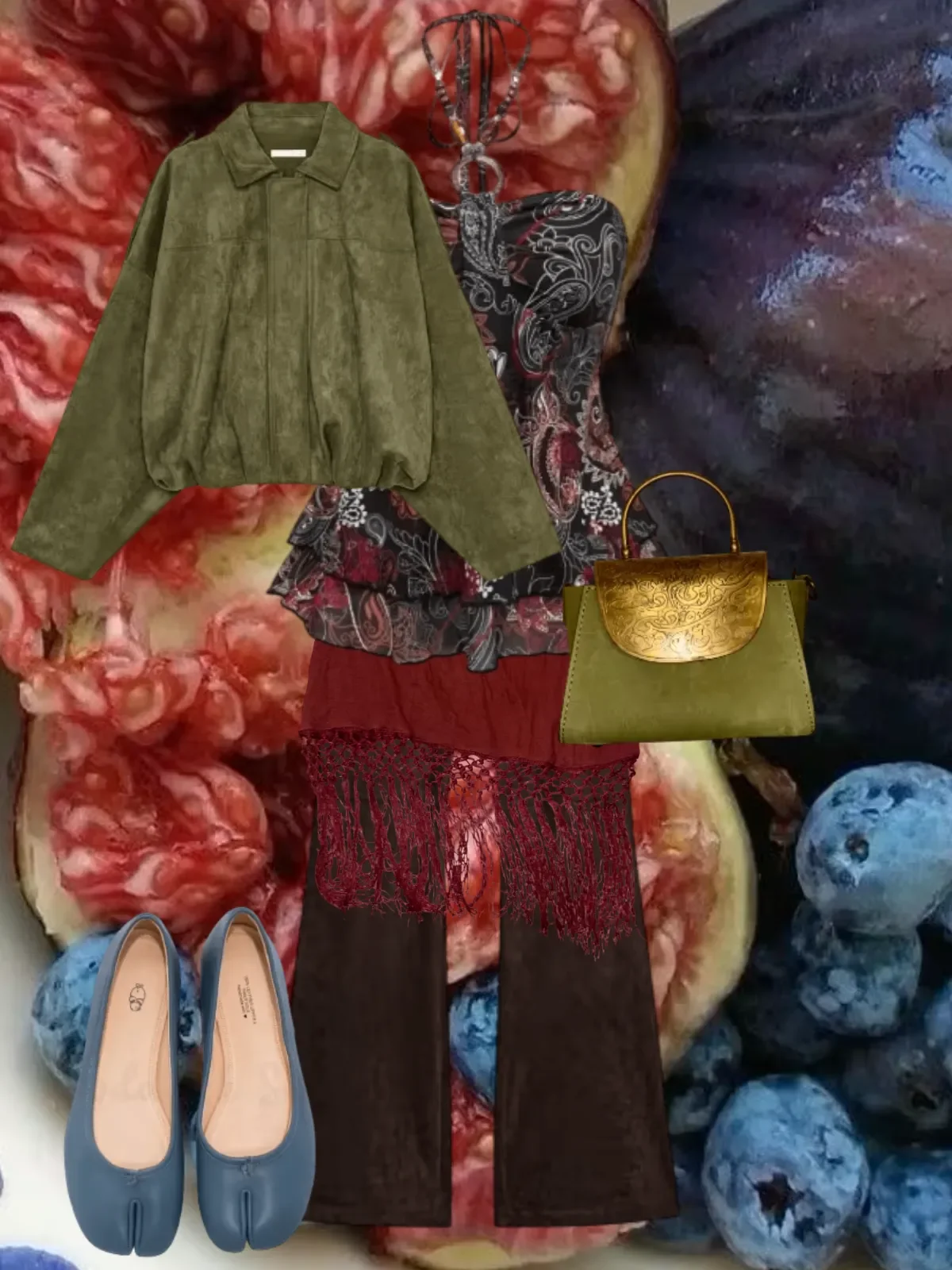
This is an example of one outfit from a client this week (A culinary graduate currently based in Jordan), using their abstract style inspiration source:
Building a Style Board
I want you to build a style board, or check in with a previous one, using the checklist below:
Overall keywords
Individual items
Colors
Specific silhouettes
Materials and fabrics
Abstract style inspiration
For a style board to do its job—which is to expand the realm of your imagination and indulge in the idealization of what your style could be— It must contain more than the obvious.
To learn more about your style, check in with these parameters and round out your style board accordingly.
INTERESTED IN SIGNING UP FOR OUR STYLE NEWSLETTER?

Check out Mac’s inteview in Coveteur

Curious about PHIKA and Mac’s signature styling philosophy?
Check out @justmacrose on Instagram, TikTok, and more for fresh fashion inspo, easy styling hacks, and a refreshing perspective on everyday style..